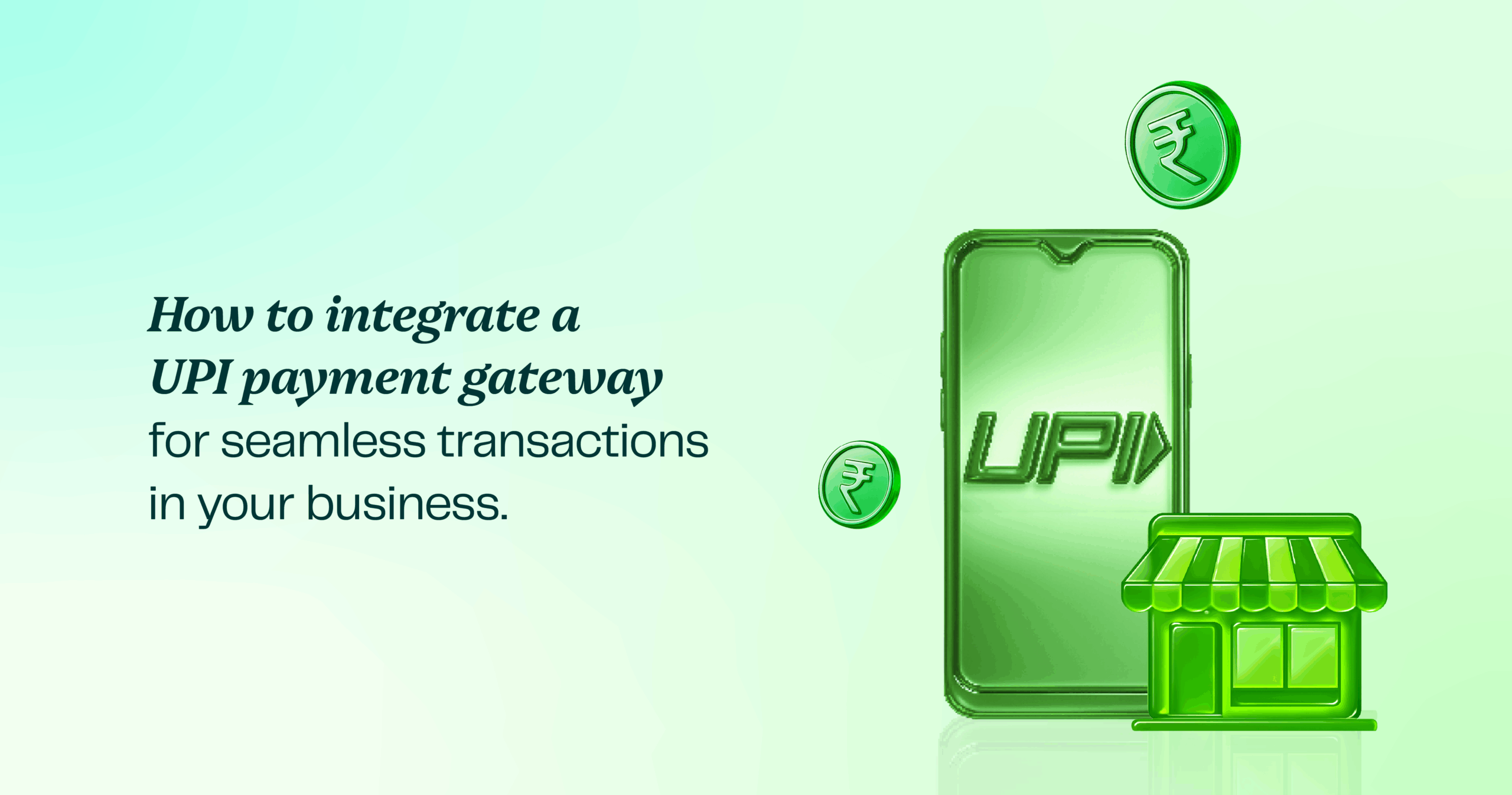
The launch of UPI has taken India by storm in recent years and has transformed the business landscape. With almost 260 million users in the country, from a taxi to your local chai stall, nearly all vendors accept UPI payments. For some, it has even become a preferred mode of payment as it can save time and effort.
You could miss significant opportunities if your business doesn’t allow customers to pay via UPI.
What Is UPI and How Can Businesses Integrate UPI Payments?
Unified Payments Interface (UPI) is a real-time payment system which facilitates inter-bank transactions. In UPI payment, the users need not enter bank account details like the account number or the IFSC code. UPI payment is instant, and the receiving party is instantly notified.
It provides several payment options, like sending or receiving money via a link or scanning a quick response (QR) code to pay a person, merchant, or service provider.
To accept a UPI payment for your business, you will need to set up your business UPI account. You can download any UPI payment app on your phone and link it to your business’s current account. You can also create a virtual payment address and an MPIN to validate your transactions.
What Are the Different Ways to Use UPI and Accept Online Payments for Business?
The best part of facilitating UPI payment is that you can share multiple payment options with your clients. Here are some options:
A)Using Payment Gateway
A payment gateway is a system to process online payments by instantly authenticating bank account details and transferring funds. You can integrate the UPI payment gateway into your business’s website or mobile app.
B)Using In-app UPI Payments
Customers can access their UPI accounts on your business app through the in-app feature. It provides a seamless experience, and customers can complete their transactions quickly.
C)Using UPI Payment Link
This alternative is ideal for small businesses that may not have a website or app for shopping. With this option, you can create UPI payment links and share them with your customers via SMS, email, WhatsApp, and other channels.
Customers have to click on the link to make their payments. You can also send your invoice along with the payment link for an enhanced experience.
D)Using QR Codes
QR codes are beneficial for both online and offline businesses. To receive payments through this option, you can display the QR code on the checkout page of your website or a printed version at your counter. Customers can scan the QR codes on their UPI app to make secure payments.
Using Auto Pay
Businesses that work on subscription models or want to enable easy instalment payments can facilitate an auto-debit feature through UPI. The customer must give a one-time UPI authentication and need not worry again. You can select the auto-debit feature through UPI to enable weekly, monthly or yearly payments.
How to Choose a Payment Service Provider for UPI Integration?
The best way to select the right payment service provider for UPI integration into your business is by assessing the pros and cons of each provider.
1.Banks
Benefits
Using a bank as your service provider for UPI payment is a convenient and easy option for your customers. Moreover, as banks have solid security practices, many customers prefer this payment mode. Banks have put limits on the transaction value to prevent fraudulent transactions.
Disadvantages
You may have to pay setup and transaction charges to banks. Moreover, the integration of your business may face a longer turnaround time. Technical glitches could delay or fail the payments, causing customers dissatisfaction. Additionally, you may need to do manual reconciliation for pending or failed transfers.
2. UPI Payment Gateway Integration
Benefits
Payment gateways allow UPI integration that is simple, quick and often comes with no setup fee. Payment gateways like Pine Labs Online allow multiple integration options and features.
For instance, Pine Labs Online offers a plug & play platform that enables customers to subscribe instantly. As there is routing to multiple banks, the success rate of transactions is higher. It also allows customers to pay later by activating easy EMI options, thereby increasing brand loyalty.
Disadvantages
As a business, you may have little control over user experience when using this option. However, you can minimise this by evaluating multiple options and selecting one that resonates with your brand.
3. UPI Apps
Benefits
The main benefit of using a UPI App is the offers and cashback that customers receive. Moreover, users in India have become more comfortable using UPI apps because of their safety and convenience in making instant payments.
Disadvantages
These apps only support UPI payment; offering other payment options may get cumbersome. In that case, you will have to integrate multiple services on your website or app.
Types of UPI Payment Gateway Integrations
1. Web Integration
You can integrate UPI payment options on your business’ website. The customer can select the UPI payment option on the checkout page to proceed with the payment. They will then have to share their UPI ID and be redirected to the UPI App on their phone.
It is a two-step authentication process where the customer needs to authenticate the payment on the app to complete the transaction.
2. Intent Flow UPI Integration
In this integration method, the UPI app on the customer’s phone launches automatically when they want to proceed with the payment. Intent flow on UPI can reduce cart abandonment and drop-offs, making this a must-have feature for any business.
3. UPI SDK Flow Integration
In this option, the customer doesn’t have to open a third-party app on their phone to make the payment. It works on mobiles with Android and iPhone operating systems. A few large banks provide this facility, and the business owner must contact the bank and request NPCI UPI Android SDK to receive payments.
4. Payment by QR code on the UPI app
Each customer order comes with a unique QR code. The customer can scan it to complete the transaction.
Conclusion
UPI payments are no longer just a convenience – they are an essential part of doing business in India. From QR-based payments and intent flows to autopay and real-time settlements, UPI has reshaped how customers expect to pay across both online and offline channels.
For businesses, enabling UPI is not only about faster transactions. It’s about reducing checkout friction, improving payment success rates, and building trust with customers who prefer simple, mobile-first payment experiences. The right UPI setup can lead to smoother operations, stronger cash flows, and higher conversion rates – whether you run an e-commerce store, a subscription business, or a hybrid model.
If you’re looking to integrate UPI in a scalable and compliant way, partnering with a platform built for India’s payment ecosystem makes a difference. Pine Labs Online offers secure, RBI-aligned UPI integration with multiple payment flows, high reliability, and future-ready infrastructure – helping businesses accept UPI seamlessly today while staying prepared for what comes next.