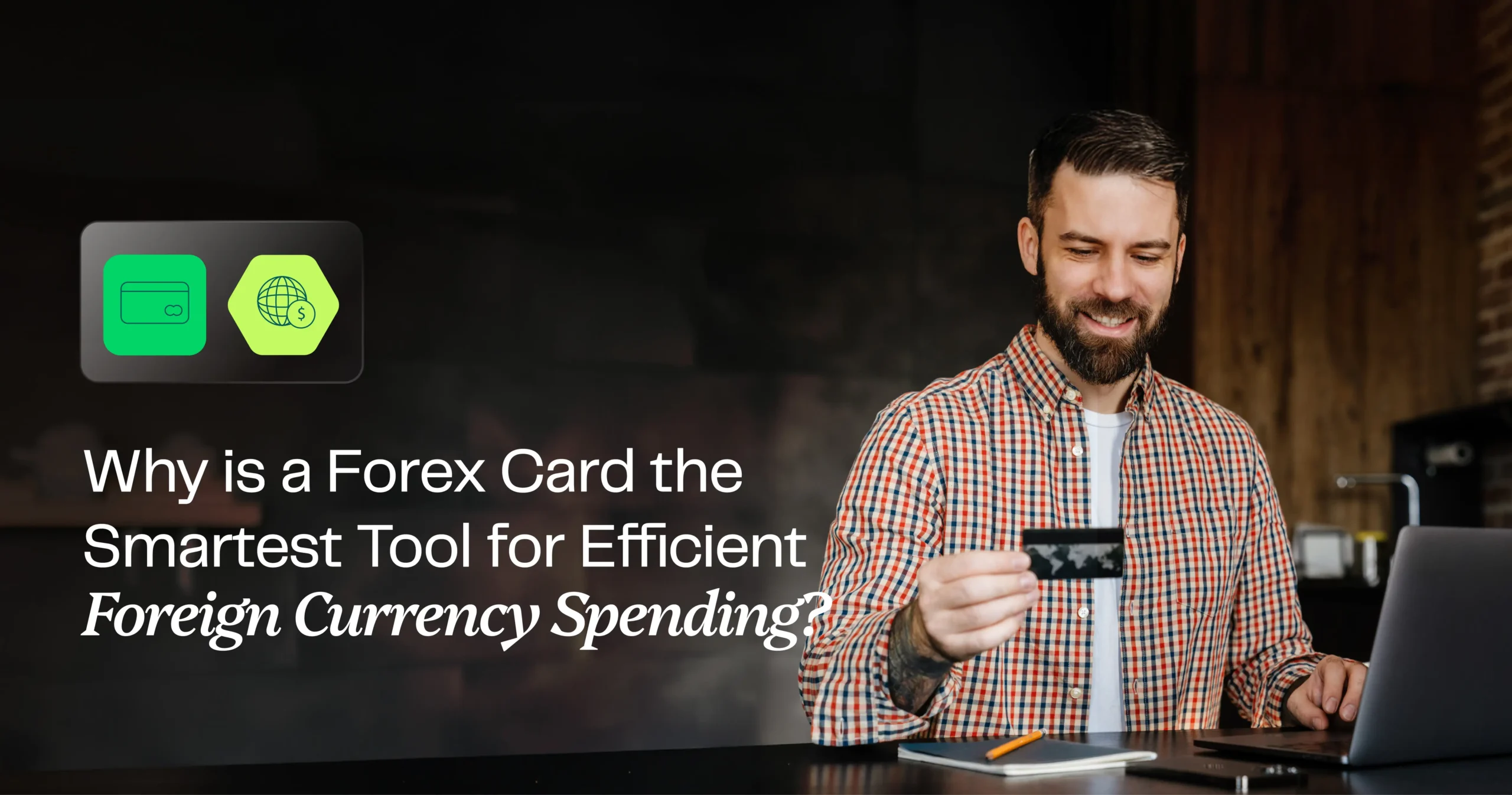
In the global economy, cross-border transactions are a part of personal and business life. For a business trip, when making online purchases from international vendors or paying for services abroad, managing foreign currency can quickly become complicated.
Currency fluctuations and high conversion fees can make international payments challenging for consumers and businesses. With the global forex cards market growing at 5.50% annually through 2031, travellers and businesses are shifting from traditional payments to smarter alternatives.
Designed to streamline foreign transactions, the forex card provides a practical, secure and cost-effective way to manage multiple currencies while keeping costs in check.
Let’s learn why the forex card is quickly becoming a smart tool for efficient foreign-currency spending.
Why does a forex card matter
A forex card, also known as a prepaid travel card, allows users to load foreign currency onto a card before travelling or making international payments. This prepaid card can be used for purchases abroad or online transactions in foreign currencies.
Unlike credit or debit cards, forex cards are designed to provide the most competitive exchange rates and lowest fees for foreign transactions. While standard bank cards typically add 1% to 3.5% in hidden markup fees on every international swipe, forex cards eliminate these charges entirely.
This lets the users spend at or near live exchange rates. For businesses, forex cards offer convenience and help mitigate the risks posed by currency fluctuations and international payment delays.
What challenges do merchants face when managing foreign currency?
Business owners who frequently engage in international transactions often face challenges. One of the biggest pain points is efficiently managing foreign currency payments. Traditional bank transfers and credit cards involve hidden fees, poor exchange rates and complex conversions, leading to higher transaction costs and reduced profitability.
Furthermore, businesses often face challenges in tracking and managing multiple international payments, leading to inefficiencies and administrative headaches. For merchants with global clients or supply chains, this becomes a time-consuming process.
Forex cards simplify currency conversion and cross-border payments, enabling businesses to pay for international services or goods without fluctuating exchange rates and high fees.
How forex cards are transforming international payment processes
Forex cards represent a shift in how businesses and travellers handle international payments. As digital wallets and mobile payment systems grow, forex cards have become part of this broader move towards more efficient financial transactions.
These prepaid cards allow users to load foreign currency in advance, helping them avoid high conversion charges often applied by banks and intermediaries. A key advantage is the ability to lock in exchange rates at the time of loading, which protects users from currency fluctuations during international spending.
Forex card charges are typically lower and more transparent than traditional payment methods, making it easier to manage budgets when paying in foreign currencies. Many forex cards also integrate with mobile payment apps, allowing businesses to track funds and make international payments directly from their smartphones, improving flexibility and operational efficiency.
How forex cards boost international conversions for businesses
Forex cards play an important role in simplifying international currency conversions. For merchants operating globally, they streamline payment processes while reducing unnecessary transaction costs. Accepting forex cards can also improve the payment experience for international customers who often face high fees or complex cross-border payment procedures.
They can also support smoother cash flow management. Businesses working with overseas suppliers can load the exact foreign currency required, reducing conversion delays and avoiding additional charges. Locking in exchange rates at the time of loading helps protect payments from currency market fluctuations.
Many forex cards also support multiple currencies on a single card. This helps businesses that operate across several countries manage payments more efficiently without maintaining multiple cards or accounts.
Future-proof your international payments with a forex card
As global commerce continues to expand, the need for an efficient, cost-effective way to manage foreign-currency spending will grow. The forex card offers a practical, secure and flexible solution for businesses that want to streamline their international payments and mitigate the risks associated with currency fluctuations. By reducing forex card charges and providing a transparent, hassle-free experience, businesses can make their cross-border transactions more predictable and profitable.
If your business relies on international payments, integrating forex cards into your payment strategy can unlock new levels of efficiency and cost savings. Embracing forex cards simplifies payment processing and strengthens your competitive edge in the global marketplace.