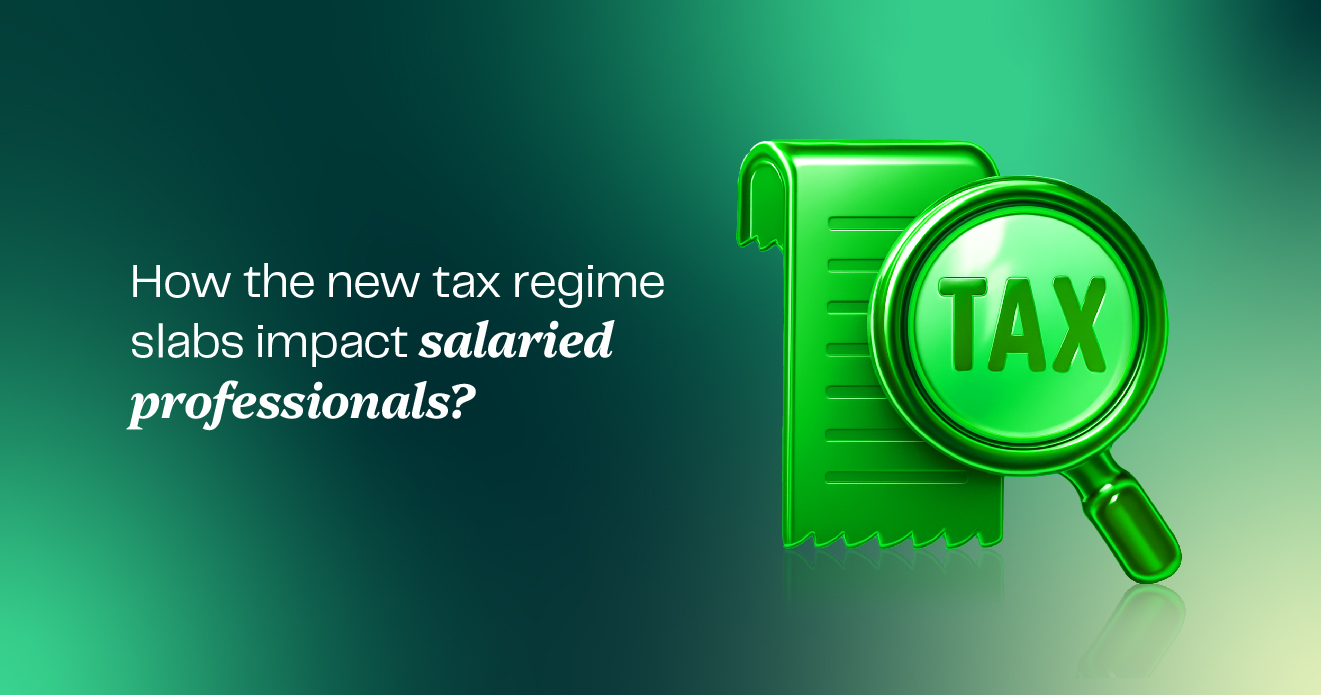
The introduction of the new tax regime slabs marks a significant shift in how salaried professionals in India manage their taxes. Aimed at simplifying tax compliance and offering a broader, flatter structure, the new regime seeks to benefit a wider group of taxpayers. However, with changes come decisions, and salaried individuals now face the challenge of choosing between the old and new structures.
The government’s clear intention is to move taxpayers towards a system with fewer deductions but lower tax rates. Yet, whether the new income tax slab structure benefits you depends on your salary bracket, investment habits and long-term financial plans. This blog examines how the new tax regime slabs affect salaried professionals and the key factors to consider before making a decision.
Understanding the latest updates to the new tax regime slabs
The government has refined the new income tax slab system further for FY 2025–26, making it simpler and more attractive, particularly for middle-income earners.
Here is an overview of the new tax regime slabs:
| Annual income range | Tax rate |
| Up to ₹4,00,000 | NIL |
| ₹4,00,001 – ₹8,00,000 | 5% |
| ₹8,00,001 – ₹12,00,000 | 10% |
| ₹12,00,001 – ₹16,00,000 | 15% |
| ₹16,00,001 – ₹20,00,000 | 20% |
| ₹20,00,001 – ₹24,00,000 | 25% |
| Above ₹24,00,000 | 30% |
A notable enhancement is the increase in the Section 87A rebate limit to ₹60,000, ensuring that individuals with annual taxable income up to ₹12 lakh may have little to no tax liability under the new regime.
Key changes salaried professionals must know
The refinements to the new tax regime slabs bring several critical changes that directly affect salaried individuals.
- Increase in the standard deduction
- The standard deduction has been increased to ₹75,000, offering a straightforward reduction in taxable income without requiring documentation.
- This adjustment alone makes the new regime more attractive to employees who prefer simplicity.
- Higher rebate limit under Section 87A
- The maximum rebate has been increased significantly.
- Salaried individuals earning up to ₹12 lakh annually can now enjoy either a nil tax or substantial tax savings.
- Removal of complex exemptions
- Traditional exemptions such as House Rent Allowance (HRA), Leave Travel Allowance (LTA) and deductions under Section 80C are not applicable in the new structure.
- The objective is to create a cleaner, paperwork-free tax experience.
How the new income tax slab benefits salaried professionals
The new tax regime slabs offer the following advantages:
- Higher take-home salary: With no obligation to invest in tax-saving instruments, professionals retain greater flexibility over their money.
- Simplified compliance: Fewer exemptions mean fewer documents to manage, making the filing process easier.
- Middle-income relief: Earners in the ₹7–12 lakh range see maximum benefit through reduced effective tax rates.
- Predictability: With a clear structure and minimal deductions, it is easier to forecast tax liability year after year.
Factors that salaried individuals should consider before choosing a regime
Choosing the correct regime requires a thoughtful evaluation of individual circumstances.
- Quantum of deductions claimed
- If deductions exceed ₹3–4 lakh annually, the old regime may still offer greater overall savings.
- If deductions are minimal, the new structure usually proves more beneficial.
- Salary bracket and career trajectory
- Professionals with a stable income between ₹7 lakh and ₹15 lakh should carefully assess the potential tax benefits under the new regime.
- Those expecting substantial bonuses or sudden salary hikes may need to factor in future tax implications.
- Lifestyle and financial planning habits
- Individuals who habitually invest in tax-saving avenues such as insurance, ELSS and PPF may prefer the old structure.
- Those who value liquidity and financial freedom may lean towards the new regime.
- Switching flexibility
Employees have the option to choose between the regimes each financial year, allowing for greater adaptability based on changing personal or financial circumstances.
Adapting to evolving tax structures through smart planning
The changes to the new tax regime slabs present an important opportunity for salaried professionals to rethink their tax strategies. By widening the rebate limits, increasing the standard deduction and smoothing the tax rate progression, the government has made the new regime highly appealing for middle-income groups. However, the decision between the old and new regime remains highly personal, depending on individual financial behaviours, salary levels and long-term goals.
By assessing potential deductions, income growth and financial priorities, salaried professionals can choose the approach that offers maximum benefit. Ultimately, smart planning and periodic review are key to ensuring that one’s tax liabilities remain optimised under the evolving new income tax slab system.